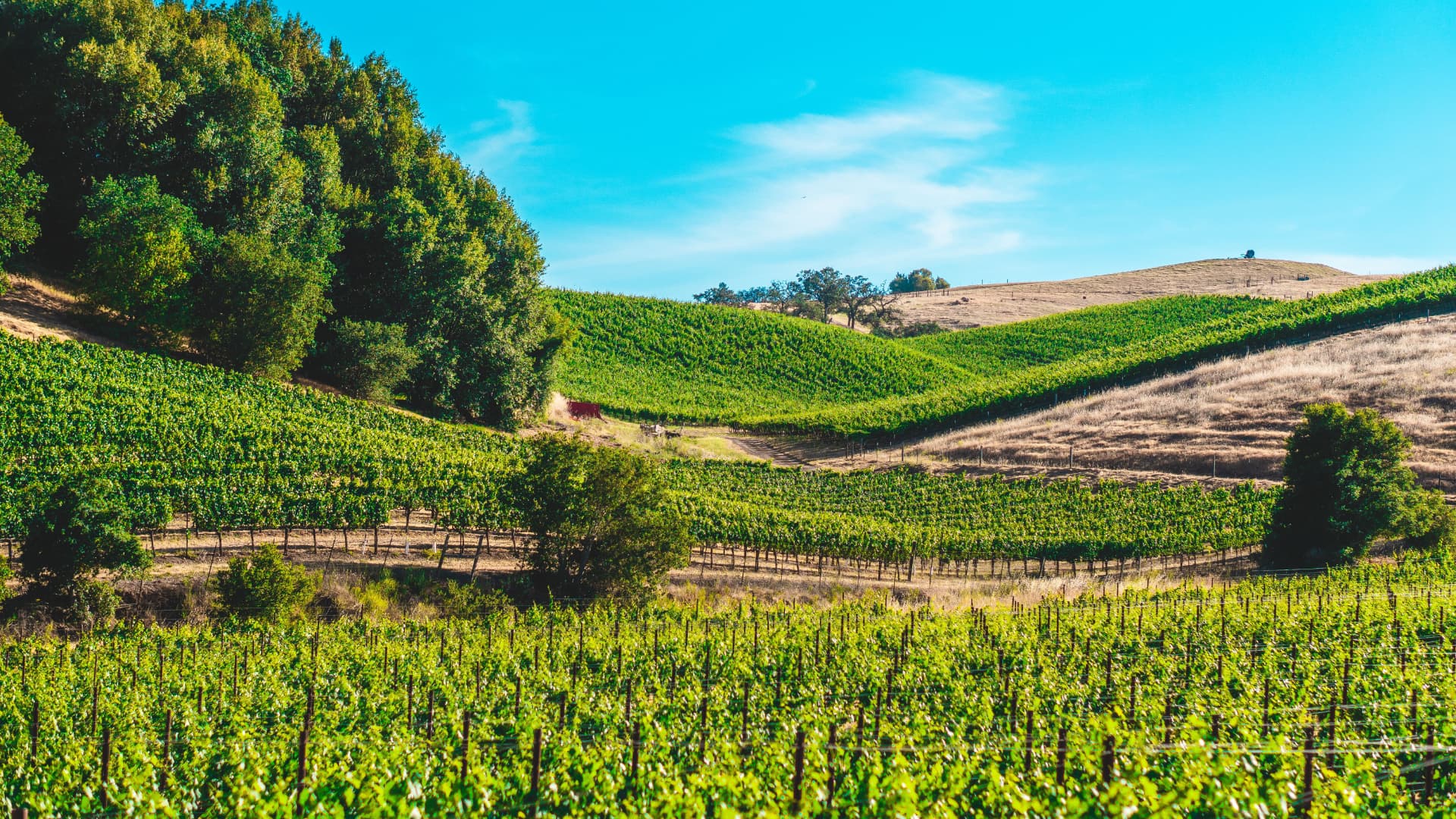
Sonoma County
Wine-country acreage, historic homes, and rural systems that demand a wider lens.
Overview
Sonoma County stretches from Petaluma and the Sonoma Valley to Sebastopol, Santa Rosa, and Healdsburg. Its housing ranges from in-town bungalows to vineyard estates and redwood retreats, so the property, utilities, land, and insurance picture all need to be understood together.
Sonoma County Market Snapshot
November 2026Sonoma County Market Snapshot: November 2026 Reality Check
Sonoma County continues to provide breathing room compared to Marin pricing, but it is far from a monolithic market. Entry-level single-family homes and modest mid-century ranches still trade well below Marin price floors, while turnkey vineyard compounds and prime settings in Healdsburg or the Sonoma Valley command multi-million-dollar sums. Heading into late fall, activity is settling into its typical seasonal rhythm, favoring methodical buyers over rushed decisions.
The breadth of housing here means two neighboring parcels can carry completely different long-term ownership costs. An updated suburban subdivision home presents an entirely different baseline than a century-old farmhouse or a rural acreage parcel tied to private wells, septic tanks, and older electrical services. Surface-level cosmetic remodels often mask dated mechanicals, so looking past staging and focusing on structural fundamentals remains essential.
- Private utilities: Well yields, water quality, and septic capacities vary drastically parcel to parcel.
- Permit continuity: Historic homes and rural additions often feature unpermitted past renovations of mixed craft.
- Seasonal negotiation leverage: Sellers holding inventory through November are generally more receptive to reasonable terms.
- Property insurance: Securing comprehensive hazard coverage early in escrow remains critical in rural and hillside pockets.
This is a directional market read, not an appraisal or CMA. Ranges reflect typical patterns for the area, not this month's live MLS figures.
Get next month's read, first.
One short email each month with what's actually moving in Sonoma County — no spam, unsubscribe anytime.
What Buyers Should Know
Wells, septic, and private utilities
Outside the larger towns, the utility picture may include a private well, septic system, propane, or shared access. Buyers should obtain current specialist reports for water quality and yield, septic capacity and condition, and any shared-use agreements before removing contingencies.
Wildfire exposure and insurability
Foothill, woodland, and rural properties can carry meaningful wildfire exposure. Roof and vent details, defensible space, access for emergency vehicles, water supply, and the availability and cost of insurance should be evaluated early in the buying process.
Older homes, additions, and site drainage
Farmhouses and older cottages often evolved in stages, sometimes with converted outbuildings or additions of different eras. Permit history, transitions between old and new construction, moisture management, and drainage across larger sites deserve careful review by the appropriate professionals.
Buyer Watch-Outs
- Rural properties without recent well-flow, water-quality, or septic documentation
- Insurance availability and cost in higher wildfire-risk areas
- Converted barns, guest units, and additions without clear permit history
Seller Angles
- Current well, septic, and water-quality reports can remove major uncertainty before offers arrive
- Documented fire-hardening, defensible-space work, and an established insurance path strengthen the listing story
- Organizing permits, utility records, and land-use documentation helps buyers evaluate complex properties with confidence
Thinking about buying or selling in Sonoma County?
Start with a structural read, not a sales pitch.